By Luzamo Sandlana
Delivering major water infrastructure requires substantial capital and strong relationships with the institutions that help finance and support these projects.
Site visits give TCTA’s lenders, investors and government stakeholders an opportunity to see projects first-hand, engage directly with project teams and better understand the scale and complexity of the infrastructure being delivered.
Among the stakeholder site tours TCTA has conducted this year are visits to the Lesotho Highlands Water Project Phase II (LHWP-II) in Lesotho and the Mooi-Mgeni Transfer Scheme Phase 2 (MMTS-2) and uMkhomazi Water Project Phase 1 – Raw Water Component (uMWP-1) in KwaZulu-Natal.
Understanding LHWP-II from the ground
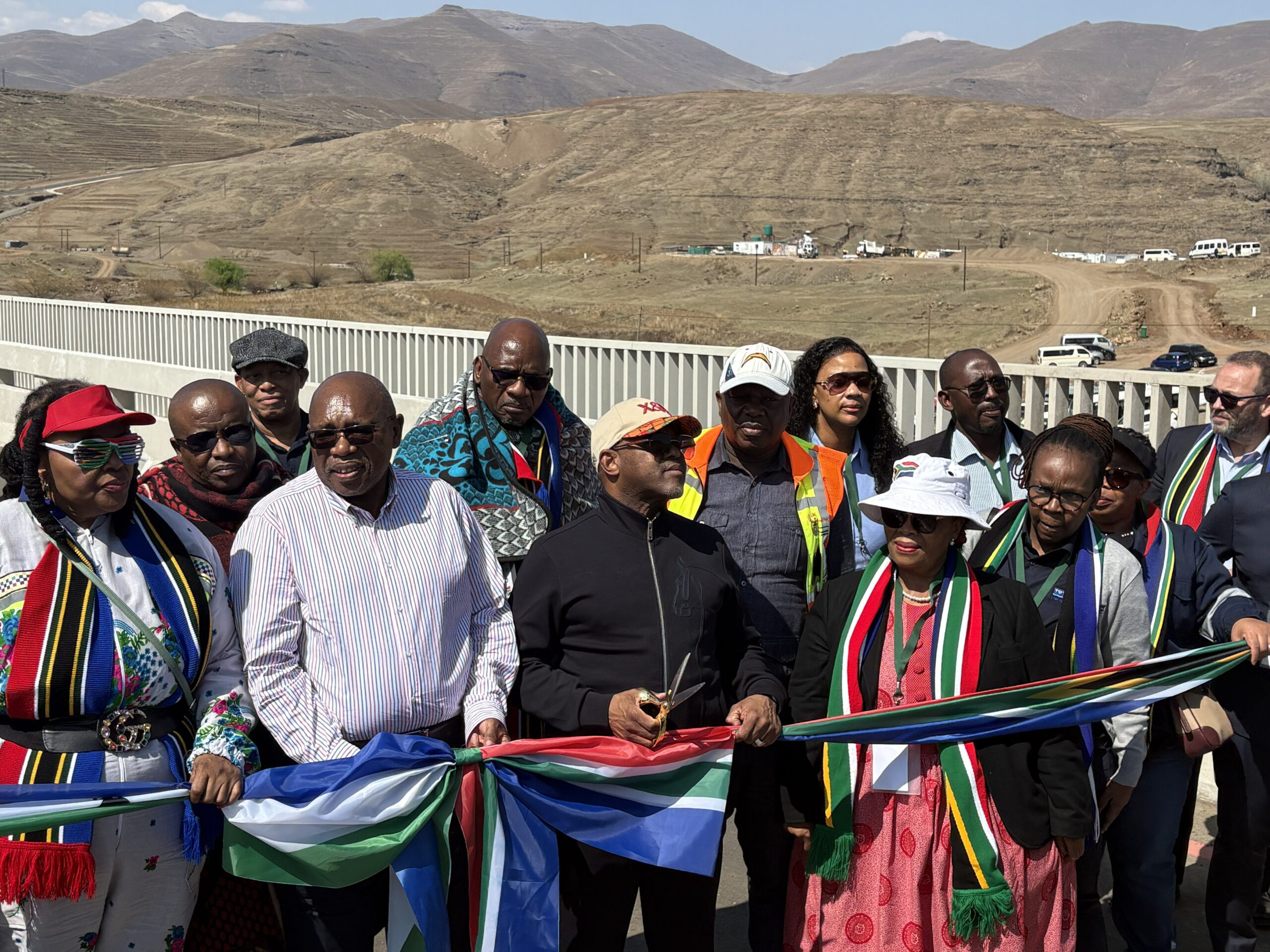
At LHWP-II, TCTA hosted representatives from commercial banks, development finance institutions, National Treasury and the Department of Water and Sanitation.
The visit gave participants an opportunity to see one of Southern Africa’s major water infrastructure projects taking shape and to engage with project teams on the ground.
LHWP-II is intended to augment water supply to South Africa while contributing to economic development in Lesotho. The site tour gave stakeholders a clearer sense of the project’s physical scale, technical complexity, implementation environment and socio-economic significance.
It also provided context for discussions around project progress and the funding requirements associated with infrastructure of this magnitude.
Participants repeatedly pointed to the value of seeing the project first-hand.
Shingirai Chimuti of National Treasury described the visit as “incredibly informative”, saying it had provided “a deeper appreciation of the scale and complexity of the project”.
Prudence Mogolola of the Industrial Development Corporation said it was “valuable to see the progress in real time” and to engage with the people whose continued efforts are making the project possible.
Justin Heunis of Rand Merchant Bank (RMB) said seeing the project first-hand was “incredibly valuable” and had given him “a much deeper perspective and appreciation of its complexity”.
Phuti Mokwatedi of Nedbank described the visit as “important and eye-opening”, particularly given the progress and level of activity under way, and said he looked forward to further engagements and new opportunities.
Bothwell Manikai, an infrastructure finance specialist at the Development Bank of Southern Africa, described the mission as “insightful and valuable”, while Advocate Bronwyn Naidoo of the Department of Water and Sanitation described it as “interesting and informative”.
Connecting investors with projects in KwaZulu-Natal
TCTA has taken a similar approach in its engagement with institutional investment manager Ninety One, hosting representatives and prospective investors in its Infrastructure Credit Fund at Spring Grove Dam, part of MMTS-2, and UMWP-1.
Ninety One already participates in infrastructure financing linked to TCTA and is also a potential participant in future funding programmes.
The visit gave participants an opportunity to see Spring Grove Dam and gain greater insight into UMWP-1. This was followed by an in-depth presentation on the uMkhomazi project, covering its scope, implementation requirements and strategic importance within South Africa’s water infrastructure programme.
The engagement gave participants a clearer view of how large water infrastructure projects are planned, financed and delivered.
Strengthening funding relationships
For TCTA, site visits are more than familiarisation exercises. They are an important part of maintaining relationships with lenders, investors and government stakeholders.
Major infrastructure projects require long-term funding commitments. The institutions supporting them need a clear understanding of the projects, the environments in which they are being implemented and the progress being made.
Site visits complement formal reporting and financial information by allowing stakeholders to engage directly with project teams, ask questions and observe progress for themselves.
They also give TCTA an opportunity to deepen relationships with existing funding partners and engage institutions that may participate in future financing programmes.
A project site therefore becomes more than a construction environment. It is also where engineering, finance and stakeholder relationships come together.
These relationships remain central to TCTA’s ability to mobilise funding for strategic water infrastructure that supports South Africa’s long-term water security.